
Booking Photos After Release
A booking photo is part of the arrest and jail-record trail. In Douglas County, DCSO's records materials list requestable jail records such as Booking Report, Jail Booking Card, Jail Booking Photo, Other Jail Records, and Photo(s). A person can leave the current inmate inquiry after release while the underlying jail record remains requestable from the records custodian, subject to redaction and access limits.
Colorado treats booking photos with a specific guardrail. C.R.S. 24-72-305.5 requires a requester to sign a statement that the booking photo will not be used in a publication or website requiring payment to remove or delete the photo. That rule is central to this page: official access exists, but exploitative republication is not an acceptable use.
Where a Release Mugshot Appears
The channel depends on the custody record. A Douglas County jail booking photo is different from a CDOC offender photo, a VINELink photo, or a registry photo. Use official sources first and treat nonofficial reposts as stale until verified.
No official DCSO 24-hour or 72-hour release-mugshot feed was found in the research. The county publishes current-custody and records-request channels, so a released person's photo search should start with the booking record rather than a public gallery. If the person is still currently housed, the live inquiry may be relevant; if the person has been released, the records custodian is usually the stronger route.
| Channel | Has photo? | How to access |
|---|---|---|
| DCSO jail records | Yes, when requestable and not restricted | Use the DCSO jail-records or records portal and choose the jail-record path for a Jail Booking Photo or related record. |
| Current Inmate Inquiry | Unconfirmed for released people | Use it for current custody first; do not assume it is a historical mugshot archive after release. |
| VINELink | Maybe | DCSO says a See Photo option may be available after opening Register/Details. |
| CDOC offender search | Possible for state prison cases | Use CDOC OSS when the person was sentenced to Colorado prison, parole, or discharge. |
| CBI registry / Douglas County SOTAR | Limited to qualifying registrants | Use only when the person has a sex-offender registration obligation; registries are not general release lists. |
| News or DCSO social posts | Event-specific | Useful only for a particular public release, not as a complete release-mugshot database. |
Request a DCSO Booking Photo
DCSO's Records and Fees page is the source-backed official route because it specifically lists Jail Booking Photo as a requestable record type.
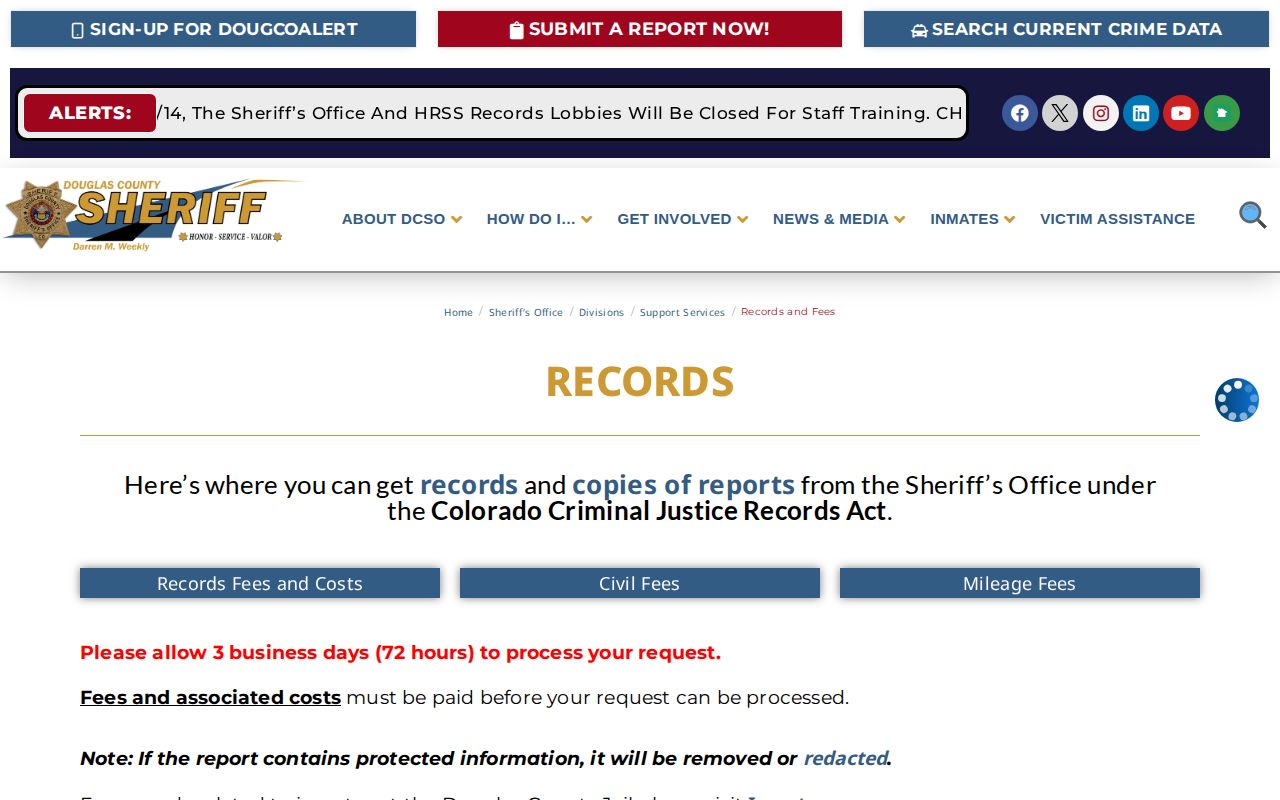
Use the record request to identify the person and booking as accurately as possible before asking for the photo.
- Gather the full name, date of birth if lawfully available, booking date, arresting agency, case number, and any Global ID or booking number from the jail or court record.
- Open the DCSO Records and Fees page or the DCSO inmate records page.
- Use the online records system for jail records, or use the downloadable records request form for mail or counter submission.
- For inmate jail or medical records, DCSO says to choose Jail Records Request from the record-type drop-down.
- Expect protected information to be redacted. DCSO says fees must be paid before records are released.
- For request-status questions, the inmate-records page lists the Records Division at 303-660-7524 and cjra@dcsheriff.net.
VINE, CDOC, and Registries
VINELink can be a photo-adjacent channel, but DCSO uses conditional language: after opening the Register/Details view, a photo may be available. That means VINELink should not be described as a guaranteed mugshot source. Its core function is custody status and release or transfer notification.
CDOC photos belong to state corrections records. If a Douglas County case becomes a prison sentence, use the CDOC offender search for the state profile, then confirm information under CDOC's disclaimer. A CDOC photo is not necessarily the original Douglas County jail booking photo.
Registry photos are even narrower. The Colorado Bureau of Investigation registry and Douglas County SOTAR layer relate to sex-offender registration duties. The CBI registry agreement says some categories are not posted online, including some misdemeanor and juvenile categories, and that local police, sheriffs, or CBI may be contacted for complete lists as allowed by law.
For Douglas County SOTAR, the local registration page gives an appointment-based process and a program phone number, but that registration function should not be generalized to every released inmate. It is relevant only when the person's offense and court obligations trigger registration duties.
The same separation applies to CDOC and county jail photos. A CDOC profile photo, when available, documents a state corrections record after the person enters prison, parole, or discharge status. A DCSO booking photo documents the county booking. If the goal is to verify the Douglas County jail event, request the jail booking photo or booking card instead of treating a later state profile as the original county image.
Sheriff App and Social Channels
Douglas County has a sheriff mobile app, but the public Apple and Google Play listings found during research describe resident communication, reports, tips, interactive features, and public-safety news. They did not state that the app publishes an inmate-release feed or mugshot gallery. The Detentions Demographic Statistics page recommends the Microsoft Power BI mobile app for viewing its interactive report, but that is a statistics and current housed-inmate context, not a release-mugshot source.
Use DCSO social channels only for event-specific public information. They can include arrest or public-safety images in particular posts, but they are not a complete booking-photo repository and should not be used instead of DCSO records.
The same caution applies to local news. A news article may carry an arrest image or agency-provided photo for a high-profile event, but it can remain online after charges change, after a case is sealed, or after a sentence ends. Treat news and social posts as leads to official records, not as the authority for a person's current release status.
Colorado Mugshot Law
The Colorado public-records angle is direct: booking photos can be criminal justice records, but Colorado law restricts pay-to-remove publication uses. The Colorado Freedom of Information Coalition summarizes C.R.S. 24-72-305.5 as requiring a booking-photo requester to sign a statement about not using the photo on a publication or website that requires payment for removal.
The Colorado FOIC open-government guide is the source for the statewide mugshot-publication guardrail.
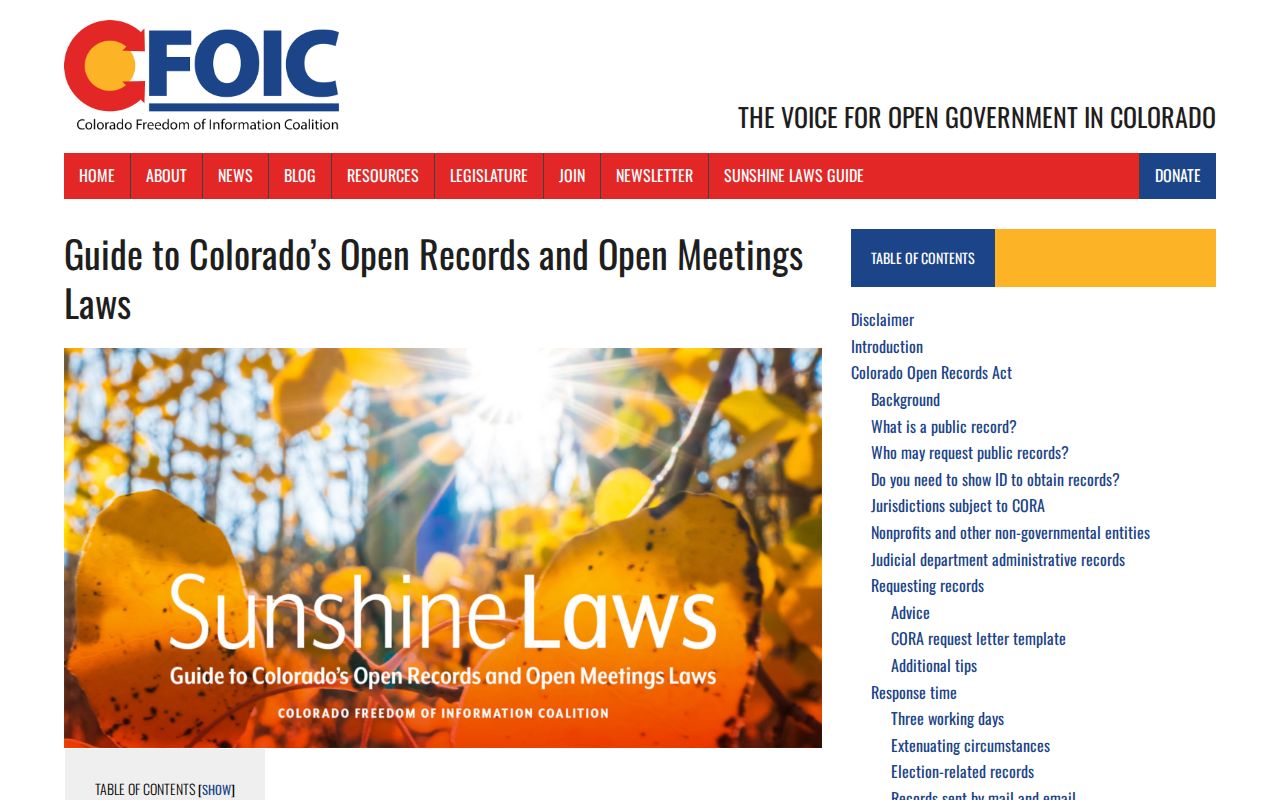
This is why the page treats mugshots as records to verify, not content to repost or monetize.
Removal, Sealing, and Expungement
Sealing and expungement affect public visibility, but they do not automatically erase every historical custody record from every system. Colorado Judicial's sealing guidance says sealed records are not destroyed and remain available to criminal justice agencies, the court, and district attorney. C.R.S. 24-72-706 addresses sealing of conviction records with conditions, timelines, and exclusions depending on the offense and supervision or release status.
Official-source check. Do not rely on commercial mugshot or data-broker pages as authority. Use DCSO, CDOC, court records, VINELink, or registry systems for official confirmation.
If a public agency record appears restricted, sealed, juvenile, or redacted, contact the record custodian or the Douglas County court rather than assuming the record never existed. If a nonofficial site has reposted a photo, official correction or sealing does not guarantee immediate private-site removal.
For an official correction, keep the chain of custody clear. DCSO controls jail booking-photo requests and jail-record redactions. Colorado Judicial controls court-file access and sealing orders. CDOC controls state offender profile information. CBI and local registry officials control registry-photo access for qualifying registrants. Mixing those sources can make a photo look current when it is only tied to an older custody event.
That source-by-source approach is also the best way to handle a name mismatch, alias, stale repost, or old photo.